
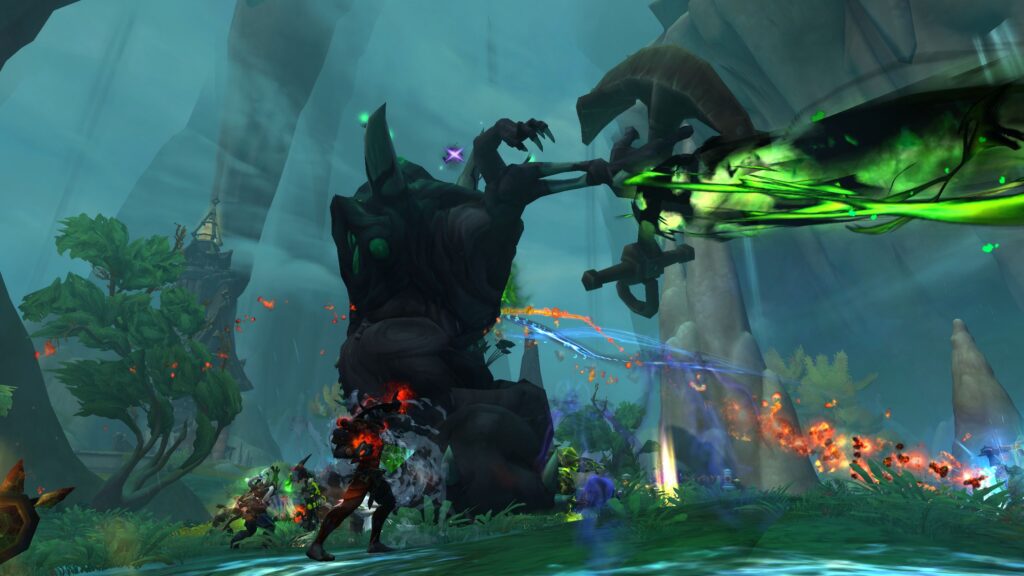
Leading a WoW raid successfully involves strategic preparation, effective communication and understanding of game mechanics. You’ll need a balanced team consisting of DPS (damage dealers), tanks and healers. Guarantee clear role assignments and maintain cooldown management to prevent chaos during fights. Keep communication lines open, utilizing voice channels for coordination. Understand boss abilities and manage debuffs effectively during encounters. Be fair in loot distribution, setting clear priority rules. Regularly provide feedback and encourage the same from your team. Remember, good leadership fosters team growth and continuous improvement. Keep this information close, and you’ll find more tips and strategies can be revealed as you journey further.
Key Takeaways
- Assemble a balanced team, assigning roles based on skills and experience to ensure raid effectiveness.
- Utilize real-time voice channels for task assignments and strategy discussions, maintaining a positive tone.
- Study boss mechanics and team dynamics to develop effective strategies and position players optimally during encounters.
- Implement a fair loot distribution system, communicating clearly about intended recipients to boost team morale.
- Set realistic goals, manage expectations, and foster a supportive environment, emphasizing learning from failures as part of raid progression.
Understanding WoW Raid Basics
Ever wondered what it takes to conquer the world of WoW raids? The key lies in understanding the raid roles and raid expectations.
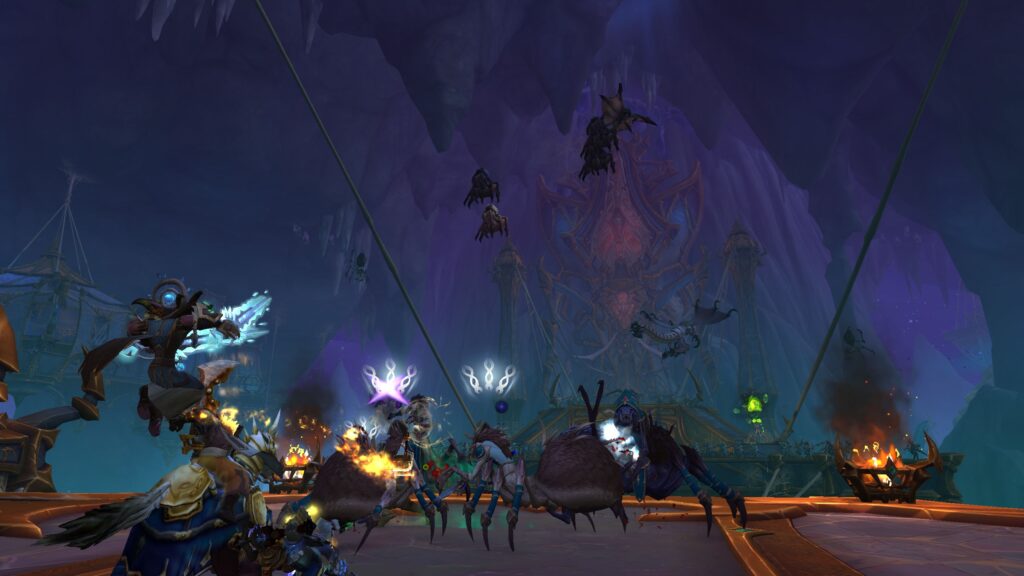
As a raid leader, you’re like a general leading an army. You’re responsible for knowing your team’s strengths and weaknesses. There are several raid roles you need to familiarize yourself with. First, there are your damage dealers, or DPS. These are your foot soldiers, dealing the most damage to enemies. Then you have your tanks, the robust warriors who absorb the bulk of the damage. Finally, you’ve got your healers, who make certain everyone stays alive and kicking.
Now, let’s talk about raid expectations. All team members should be aware of the raid’s objectives and strategies. They should know their roles and what’s expected of them. It’s your job to communicate this clearly. Making sure everyone’s on the same page is essential to your raid’s success.
Remember, WoW raids aren’t won by individual skill alone. It’s about team synergy, effective communication, and a solid understanding of raid mechanics. Mastering these basics will set you on the path to leading your team to victory.
Stay tuned for the next subtopic: “Mastering Raid Preparation”.
Mastering Raid Preparation
Mastering raid preparation is a key step in leading a successful WoW raid. You’ll need to focus on assembling the perfect team and strategic planning pre-raid. These two components will set the foundation for your raid’s success.
Assembling the Perfect Team
You might think assembling the perfect World of Warcraft raid team is as simple as rounding up your highest-level friends. However, a successful team requires a bit more finesse. Consider these elements: team synergy, class composition, roles assignment, player balance, personality dynamics, skill diversity, accountability measures, and raid flexibility. These aren’t just catchy buzzwords, they’re your roadmap to victory.
- Team Synergy and Class Composition: The right mix of classes can make or break your raid. You’ll need a balance of tanks, healers, and DPS classes. Their skills and abilities should complement one another, creating a team synergy that maximizes effectiveness.
- Roles Assignment and Player Balance: Not everyone can be the star. Assign roles based on skills, not just levels. Confirm there’s a balance between experienced veterans and enthusiastic newcomers. This gives you a mix of reliability and potential growth.
- Personality Dynamics and Accountability Measures: You’re dealing with people, not just avatars. Personality clashes can sink a raid before it starts. Implementing accountability measures can help manage these dynamics and encourage cooperation.
Strategic Planning Pre-Raid
Now that you’ve assembled your team, it’s time to focus on the journey ahead. Your pre-raid strategic planning is essential for success. First, consider your raid composition. This is the mix of classes and roles in your team. You need a balance of damage dealers, healers, and tanks. It’s not just about quantity, but quality. Each member’s skill set should complement the others.
Next, you need to plan your cooldown management. In WoW, cooldowns are the waiting periods before a player can use certain abilities again. Good cooldown management makes the difference between a smooth raid and a chaotic mess. Assign roles to manage group-wide cooldowns. This will help your raid to use their abilities efficiently and effectively.
Enhancing Team Communication
Leading a successful WoW raid hinges on effective team communication. Your raid’s success often depends on how well you guide your team through voice channels. These platforms enable strategic discussions, character role clarifications, and feedback sessions. However, communication is not just about speaking; it’s also about active listening.
- Voice Channels: Use these to share tactics, assign tasks based on character roles, and conduct real-time strategic discussions. Just make certain to manage your tone, as it can greatly impact your team’s morale.
- Feedback Sessions: After a raid, conduct feedback sessions. This is where you’ll learn what worked, what didn’t, and how you can improve. Open lines of communication encourage team members to share their thoughts and ideas.
- Conflict Resolution & Motivational Tactics: Raids can stir up conflicts. Be the mediator, listen to both sides, and find a resolution. Use motivational tactics to keep spirits high and make certain everyone’s focused on the common goal.
Strategic Boss Encounters
Now, let’s focus on strategic boss encounters. You need to understand boss mechanics well to plan successful strategies. So, buckle up as we explore this essential aspect of leading a WoW raid.
Understanding Boss Mechanics
In the heart of each WoW raid, you’ll find challenging and complex boss encounters. These battles demand your understanding of boss abilities, phase shifts, and damage thresholds. Comprehending the encounter timings, positioning strategies, and debuff management is essential. You’ll also need to be aware of enrage timers, master crowd control, and adapt to environmental hazards and attack patterns.
- Boss Abilities and Phase Shifts: Each boss has unique abilities that can drastically affect the outcome of the encounter. Recognizing when a boss is about to shift into a new phase can help you counteract their abilities.
- Positioning and Debuff Management: Positioning is key to surviving boss abilities. Managing debuffs efficiently can turn the tide of the battle in your favor.
- Timings, Crowd Control, and Hazards: Understanding encounter timings and enrage timers allows you to better strategize. Effective crowd control can minimize damage, and being aware of environmental hazards helps you avoid unnecessary setbacks.
Planning Successful Strategies
Armed with a thorough understanding of boss mechanics, you’re ready to plan successful strategies for strategic boss encounters. Critical to this is your raid composition. It is crucial to balance your team with a mix of damage, healing, and tank roles. Too much of one can leave you vulnerable.
You’ll also need to conduct an encounter analysis. Look at the strengths and weaknesses of your team and the boss. Where can you exploit a boss weakness? Where do you need to bolster your team’s defenses?
Consider this table as an example:
| Role | Strengths | Weaknesses |
|---|---|---|
| Damage | High DPS | Low Defense |
| Healing | Sustain | Limited Offense |
| Tank | High Defense | Low DPS |
In this setup, your damage dealers can exploit a boss’s weakness, but they might need protection. Your healers provide that sustain but can’t contribute much to offense. Your tanks can soak up damage, but they won’t be your primary damage source.
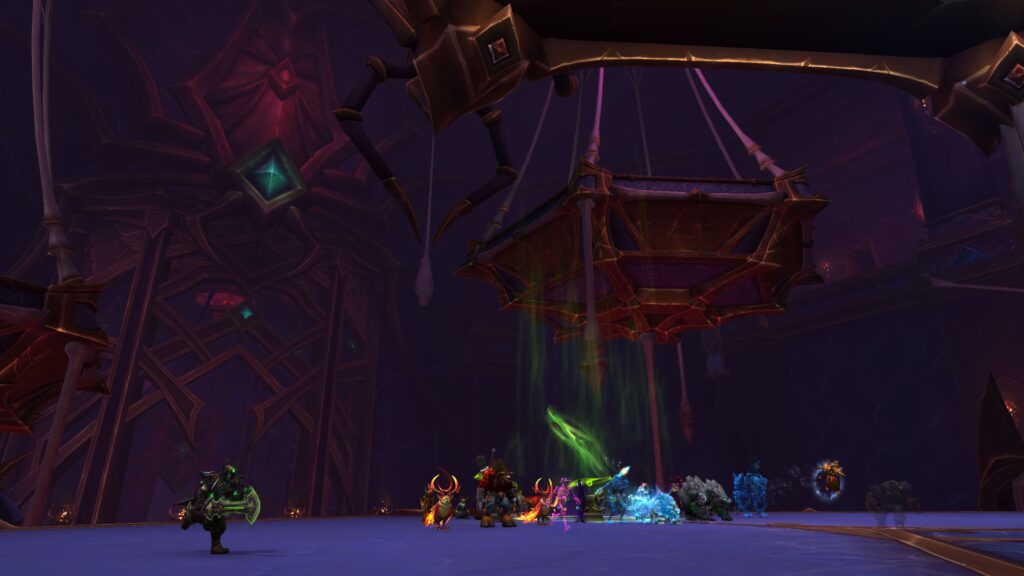
Planning successful strategies involves understanding these dynamics and forming a plan. It’s a complex process, but with time, you’ll become adept at leading your raid to victory.
Handling Loot Distribution
After the dust settles and the last boss falls, it’s time to distribute the loot. As a raid leader, you’re in charge of this process, and it’s essential you handle it fairly. A well-structured loot distribution system can boost morale and guarantee everyone feels rewarded for their efforts.
Here’s a three-step guide to managing loot distribution:
- Establish Loot Priority: Before the raid, clarify who gets first dibs on loot. This could be based on roles, gear needs, or contribution to the raid. It’s not about favoritism; it’s about meeting the team’s needs.
- Communicate Clearly: When loot drops, announce what it is and who it’s for. Transparency avoids misunderstandings and keeps things fair.
- Use a Loot System: Whether it’s ‘Need before Greed’, DKP, or loot council, pick a system and stick to it. Explain it clearly at the beginning of the raid.
Dealing With Raid Difficulties
Raiding in WoW isn’t always smooth sailing. You’ll face multiple challenges, and how you handle these difficulties can make or break your raid. One common hurdle is overcoming frustration. When progress slows and the same boss wipes your team time after time, tempers can flare. Don’t let frustration control the raid. Instead, channel that energy into finding new strategies and improving coordination.
Managing expectations is another key aspect of dealing with raid difficulties. You should be realistic about your team’s capabilities and the challenges ahead. Not every raid will be a success, and that’s okay. Part of leading a raid is helping your team understand that setbacks are part of the process, and each attempt, successful or not, is a learning opportunity.
Conclusion
Leading a WoW raid is a journey, much like commanding a ship through stormy seas. You’ve mastered the map, prepped your crew, and communicated well. You’ve navigated treacherous boss encounters, distributed loot judiciously, and handled difficulties with aplomb. As a captain, your job isn’t easy, but the thrill of victory makes it worth the challenge. So, keep honing your skills, raid leader. The seas of Azeroth are ever-changing, but with these tips, you’re well-equipped to sail them.
Home